
Procedures
Dental Implants in Mesa, AZ
Replace Missing Teeth With Confidence
At AZ Max Oral & Maxillofacial Surgeons, your dental implants are planned and placed by experienced oral and maxillofacial surgeons. Whether you are replacing one tooth or rebuilding your smile, our team will help you understand your options and choose the right path forward.
Locations
Board-Certified Oral Surgeons
Patients Treated
Years of Service
Why Choose AZ Max for Dental Implants?
Dental implants require more than replacing a missing tooth. Successful treatment depends on clear and precise planning,expert surgical execution, and proper post operative care. At AZ Max, your procedure is performed by experienced oral and maxillofacial surgeons with advanced hospital-based training in facial trauma reconstruction, cosmetic correction, pathology, dental and facial implant surgery, bone and soft tissue grafting and anesthesia care.
What Sets Us Apart
- Personalized patient experience
- Multiple board-certified oral and maxillofacial surgeons
- Advanced hospital-based surgical and anesthesia training
- Full-arch implant and bone grafting expertise
- 3D imaging and detailed surgical planning
- Five Arizona locations for convenient access to care



Meet Our Dental Implant Surgeons
Our team includes multiple board-certified surgeons, PHOENIX Magazine Top Dentist honorees and experienced providers who treat everything from single-tooth implants to complex full-mouth implant cases.






Together, our surgeons bring advanced surgical training, years of implant experience and a reputation for handling complex cases with precision and confidence.
What Are Dental Implants?
A dental implant is a small titanium post placed in the jawbone to replace a missing tooth. After the area heals, the implant acts as a stable foundation for a crown, bridge, denture or full-arch restoration.
Dental implants are designed to support long-term function, help maintain jawbone support after tooth loss and restore a more natural feel when chewing and speaking. They can be used to replace one missing tooth, several teeth, or a full arch depending on your treatment needs.
Dental Implant Parts
A complete dental implant restoration usually includes three parts:
- Implant post: The titanium post placed in the jawbone
- Abutment: The connector that attaches the implant to the replacement tooth
- Restoration: The visible replacement tooth, such as a crown, bridge, denture or full-arch prosthesis
Together, these parts work to replace the missing tooth and support long-term function.
How Dental Implants Support Long-Term Function
When a tooth is lost, the jawbone in that area no longer receives the same stimulation from chewing and biting. Over time, this can lead to bone loss and changes in support for nearby teeth. A dental implant is placed in the jawbone to help restore that support and create a stable foundation for tooth replacement.
After healing, the implant can support a crown, bridge, denture or full-arch restoration. Because it is anchored directly in the jawbone, it provides more stability than removable tooth replacement options and is designed to support long-term function.
Long-Term Benefits of Dental Implants
Dental implants can help:
- Improve chewing strength and stability
- Reduce movement from removable dentures
- Help reduce bone loss after tooth loss
- Support facial structure after tooth loss
- Replace teeth without altering nearby teeth
- Support long-term comfort and function
Dental implants are designed to restore more than the appearance of a missing tooth. They are intended to support long-term comfort, stability and everyday oral function.
Dental Implant Options
Not every patient needs the same type of implant treatment. Your surgeon will recommend an option based on your goals, bone support, number of missing teeth and final restoration.
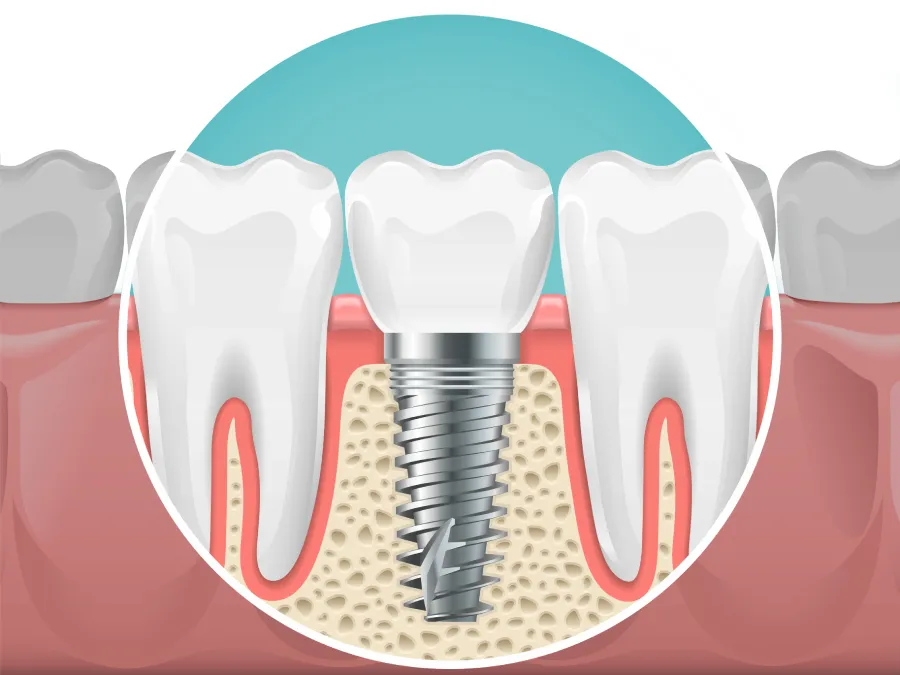
Single Dental Implants
A single dental implant is often recommended when one tooth is missing or cannot be saved. The implant is placed in the jawbone and, after healing, supports a custom crown designed to blend in with the surrounding teeth.
Unlike a traditional dental bridge, a single implant does not rely on neighboring teeth for support. This means the surrounding healthy teeth do not need to be reshaped or altered as part of treatment.
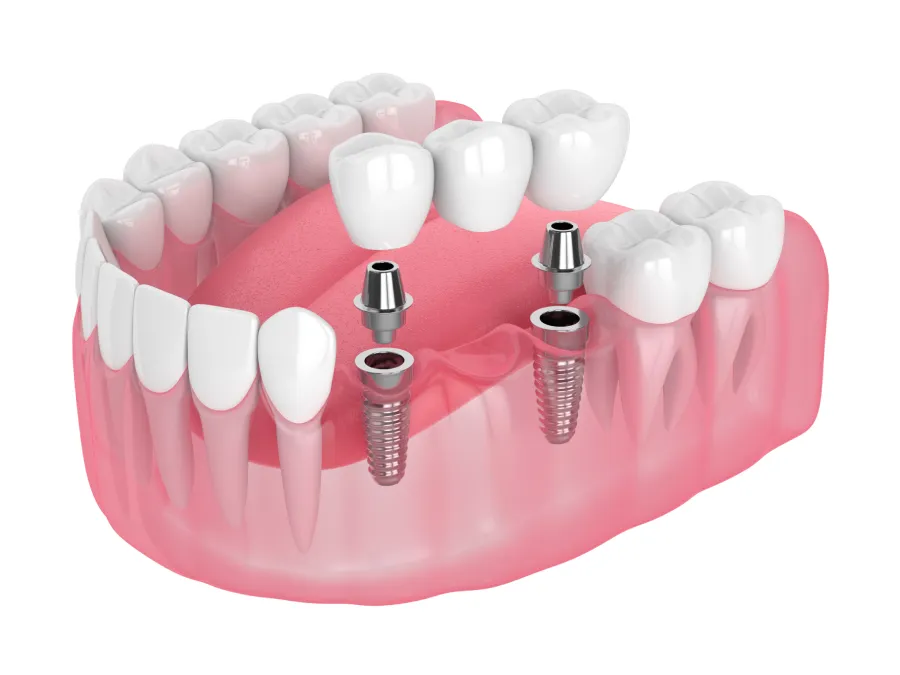
Implant-Supported Dental Bridge
When several teeth are missing in the same area, dental implants can be used to support a fixed bridge. Instead of replacing each tooth with a separate implant, strategically placed implants support multiple replacement teeth as part of one restoration.
An implant-supported bridge stays fixed in place and does not rely on neighboring natural teeth for support. Compared to a removable partial denture, it often provides greater stability while eating and speaking.
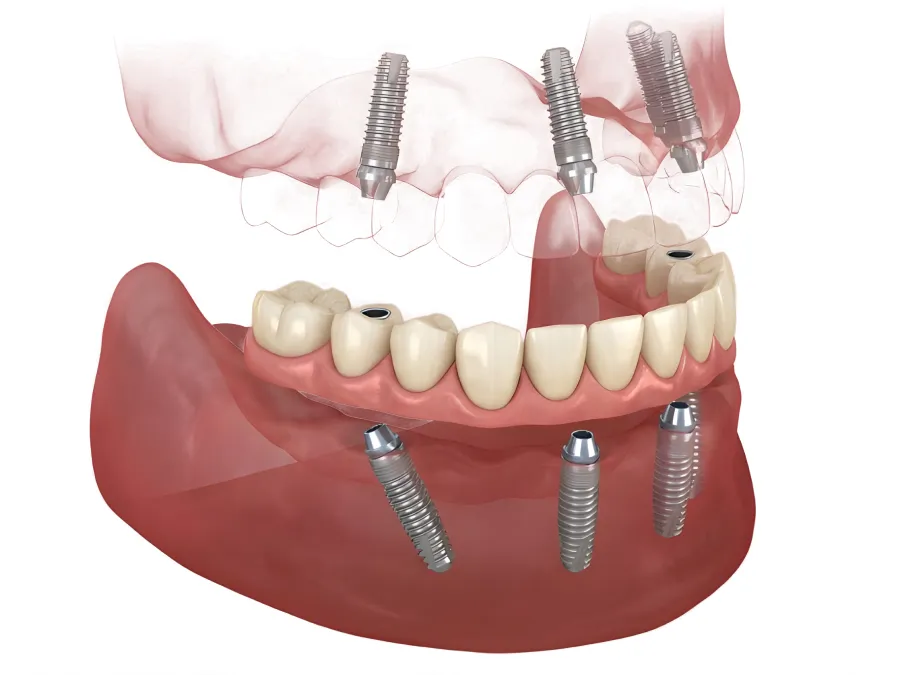
Full-Arch Dental Implants
For patients missing most or all teeth in the upper or lower jaw, full-arch dental implants can support a fixed or removable full-arch restoration. Options may include All-on-4, All-on-X, hybrid implants or other full-arch solutions depending on the case.
Are You a Candidate for Dental Implants?
Many healthy adults with missing teeth are candidates for dental implants. The main question is whether the implant can be placed in a stable, healthy position with enough bone and gum support.
You may be a good candidate if you:
- Have one or more missing teeth
- Have a damaged tooth that cannot be saved
- Want a fixed replacement instead of a removable denture
- Have enough jawbone to support an implant or qualify for bone grafting
- Have healthy gums or can treat gum disease before implant placement
- Do not smoke, or are willing to stop during healing
- Can maintain good oral hygiene and regular dental visits
Your surgeon will evaluate your bone support, oral health, overall health and treatment needs to determine whether dental implants are right for you.
The Dental Implant Process
Dental implant treatment happens in stages. Your timeline may vary depending on whether you need extractions, bone grafting, temporary teeth or full-arch treatment.
1. Consultation and 3D Planning
Your surgeon evaluates your mouth, jawbone, bite, health history and goals. Imaging is used to assess bone support and plan implant placement. Your surgeon will also review anesthesia options based on your procedure and comfort needs.
2. Tooth Extraction or Bone Grafting (If Needed)
If a damaged or infected tooth is still present, it will need to be removed before implant placement. In some cases, the implant can be placed during the same appointment. Other cases may require healing time before the implant is placed.
If the jawbone does not have enough support for an implant, bone grafting may be recommended before or during implant placement. This helps rebuild or preserve the bone needed for long-term implant stability.
3. Dental Implant Placement
The dental implant is placed in the jawbone in the planned treatment area. Detailed imaging and surgical planning help position the implant to support long-term stability, function and the final restoration.
4. Healing and Integration
Over the next several months, the implant bonds with the surrounding bone. This process creates the foundation needed for long-term stability.
5. Final Restoration
Once the implant is ready, your restorative dentist creates the final crown, bridge, denture or full-arch restoration. We coordinate with your restorative dentist so the surgical placement supports the final prosthetic.
Recovery After Dental Implant Surgery
Most patients tolerate dental implant surgery well. During the procedure, anesthesia is used to keep you comfortable. After surgery, mild soreness, swelling and tenderness are common for the first several days, especially if extractions or bone grafting are involved.
Recovery can vary depending on the number of implants placed and whether additional procedures were performed. Single dental implants often involve a shorter, easier recovery than full-arch implant treatment or complex grafting procedures.
Your surgeon will review what to expect after surgery and provide detailed post-operative instructions based on your treatment plan.
FAQs About Dental Implants
How long do dental implants last?
Dental implants are designed to be a long-term tooth replacement option. With good oral hygiene, regular dental care and healthy surrounding bone and gum tissue, many implants can last for decades. The crown, bridge or denture attached to the implant may need replacement over time due to normal wear.
Do dental implants hurt?
Dental implant surgery is performed with anesthesia to keep you comfortable during the procedure. After surgery, mild soreness, swelling or pressure is common for a few days. Most patients manage recovery well with their post-operative instructions and recommended medications.
Can I get a dental implant right after a tooth extraction?
Immediate implant placement may be possible when the bone and gum tissue are healthy enough and there is no active infection that would affect healing. If the area needs more support, your surgeon may recommend bone grafting or a staged approach.
Can teenagers get dental implants?
Dental implants are recommended after jaw growth is complete. Placing an implant too early can affect long-term positioning as the jaw continues to develop.
When is it too late to get dental implants?
There is no upper age limit for dental implants. Many adults pursue implant treatment years after losing teeth, and age alone does not prevent someone from being a candidate.
Can I get an implant years after losing a tooth?
Many patients get dental implants years after a tooth has been removed or lost. Even if bone loss has occurred over time, additional treatment such as bone grafting may help create enough support for implant placement.
Where can I get dental implants in the Phoenix East Valley?
AZ Max Oral & Maxillofacial Surgeons provides dental implant treatment at locations in Mesa, North Mesa, Queen Creek, Tempe and Show Low. We offer free dental implant consultation at all of our locations. Call or text (480) 830-5866 to book an appointment.
Schedule a Free Dental Implant Consultation
Book a consultation at one of our five locations:
Mesa, North Mesa, Queen Creek, Tempe and Show Low


