
Reading time: 4 minutes
If you have ear pain along with discomfort in the back of your mouth or jaw, your wisdom teeth could be the cause. Because the jaw and ear share nearby nerves, pain from a wisdom tooth can sometimes be felt around the ear instead.
Why Wisdom Teeth Can Make the Ear Hurt
Wisdom teeth can cause ear pain, but the pain usually does not come from the ear itself. It often starts in the jaw or back molar area and feels like it is spreading toward the ear. This is called referred pain.
The teeth, jaw, and ear share nearby nerve pathways, so pain from one area can feel like it is coming from another. When a wisdom tooth irritates the surrounding gum, jawbone, or nearby teeth, the discomfort may be felt near the ear.
Wisdom tooth-related ear pain may feel like:
- A dull ache near the ear
- Pressure in the jaw or side of the face
- Pain that worsens when chewing
- Throbbing near the back molars
- Tenderness that spreads toward the temple
- Jaw stiffness or difficulty opening fully
The pain may come and go at first, especially if the wisdom tooth is only partly erupted or is irritating the gum tissue around it.
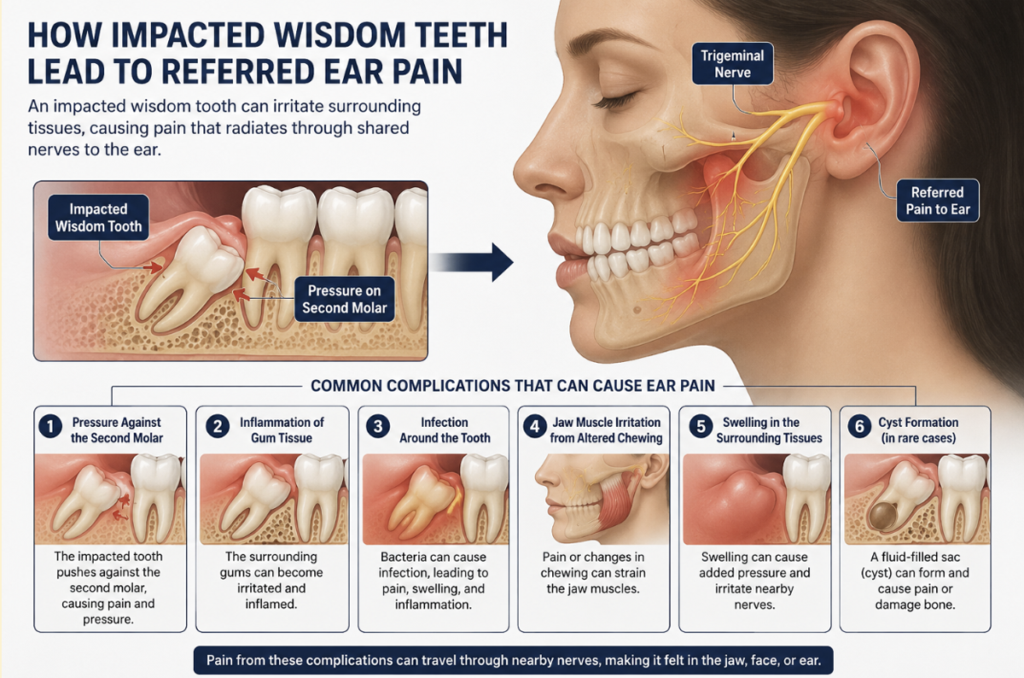
How Impacted Wisdom Teeth Lead to Referred Ear Pain
An impacted wisdom tooth is a third molar that does not have enough room to erupt normally. Instead of growing into the correct position, it may remain trapped beneath the gums, emerge only partially, or grow at an angle against the neighboring tooth.
Because impacted wisdom teeth are difficult to clean and place added pressure on the surrounding tissues, they are more likely to become painful or develop complications that can lead to ear pain.
These complications include:
- Pressure against the second molar
- Inflammation of the surrounding gum tissue
- Infection around the tooth
- Jaw muscle irritation from altered chewing
- Swelling in the surrounding tissues
- Cyst formation in rare cases
When a Partially Erupted Wisdom Tooth Becomes Infected
One of the most common causes of wisdom tooth pain is pericoronitis, an infection or inflammation of the gum tissue surrounding a partially erupted wisdom tooth.
When a wisdom tooth only breaks through the gum partway, a small flap of tissue can trap food and bacteria. This makes the area difficult to clean and increases the risk of infection.
Symptoms of pericoronitis may include:
- Pain around the back molars
- Swollen or tender gum tissue
- Bad breath
- A bad taste or drainage from the area
- Difficulty opening the mouth
- Pain that radiates into the jaw or ear
- Facial swelling in more severe cases
When to Schedule a Wisdom Tooth Evaluation
An evaluation is recommended when ear pain appears with wisdom tooth symptoms or does not improve. Wisdom tooth problems can become more difficult to treat if infection, swelling, or pressure worsens.
Schedule a wisdom tooth evaluation if these symptoms become more severe, keep returning, or are accompanied by:
- Pain behind the last molars
- Jaw swelling
- Gum swelling around a wisdom tooth
- Bad taste, pus, or bad breath
- Trouble opening the mouth
- Pain when chewing
- Fever or feeling unwell
- Symptoms that keep returning
Seek urgent care if swelling affects swallowing or breathing, pain becomes severe, or fever develops with facial swelling.
Wisdom Teeth Removal at AZ Oral & Maxillofacial Surgery
At AZ Oral & Maxillofacial Surgery, our board-certified oral and maxillofacial surgeons use advanced 3D imaging to accurately evaluate the position of your wisdom teeth, identify the source of your symptoms, and recommend the most appropriate treatment.
Our surgeons routinely remove impacted, infected, and complex wisdom teeth, including cases that may be too close to important nerves or too difficult for a general dentist to treat. When possible, we also offer same-day evaluations and treatment for patients experiencing severe pain or infection.
From your consultation through recovery, our team is committed to making the process as comfortable as possible with clear communication, personalized care, and anesthesia options tailored to your needs.
Oral Surgeon in North Mesa, AZ
If you are experiencing ongoing discomfort around a wisdom tooth, our oral surgeons can determine whether your symptoms are related to an impacted or infected wisdom tooth and discuss the treatment options that are right for you.
To book an appointment at our oral surgery office in North Mesa, call or text (480) 830-5866 or visit us at 6808 E Brown Rd, Mesa, AZ 85207.
📍Other locations
- AZ Max Oral Surgery in Mesa
- AZ Max Oral Surgery in Show Low
- AZ Max Oral Surgery in Queen Creek
- AZ Max Oral Surgery in Tempe
FAQs
Can wisdom teeth cause headaches and ear pain?
Yes. Impacted or infected wisdom teeth can cause pain that radiates into the jaw, temples, and ear because these areas share nearby nerves and muscles.
Can wisdom teeth cause a sore throat and ear pain?
They can. Inflammation or infection around a wisdom tooth may cause discomfort that spreads into the throat and ear, particularly if the tooth is partially erupted or infected.
Can wisdom teeth affect your sinuses?
Upper wisdom teeth can sometimes contribute to sinus pressure or discomfort because of their proximity to the maxillary sinuses. An examination can determine whether your symptoms are dental or sinus-related.
Can wisdom teeth cause ringing in the ears (tinnitus)?
There is no strong evidence that wisdom teeth directly cause tinnitus. However, jaw inflammation or TMJ problems associated with impacted wisdom teeth may contribute to symptoms in some people. Persistent ringing in the ears should be evaluated by a medical professional.


